
Still Running on Fuses? Conversion Myths Forest, VA and surrounding area Homeowners Believe
Some homes in Forest, VA and surrounding areas, still rely on fuse boxes that have quietly served for generations. Lights turn on, outlets work, and daily routines continue without obvious trouble. That reliability often creates a false sense of security. Fuse boxes feel familiar, even charming in an old-house kind of way, so they rarely come under scrutiny unless something goes wrong. Comfort with the familiar allows outdated systems to linger far longer than they should.
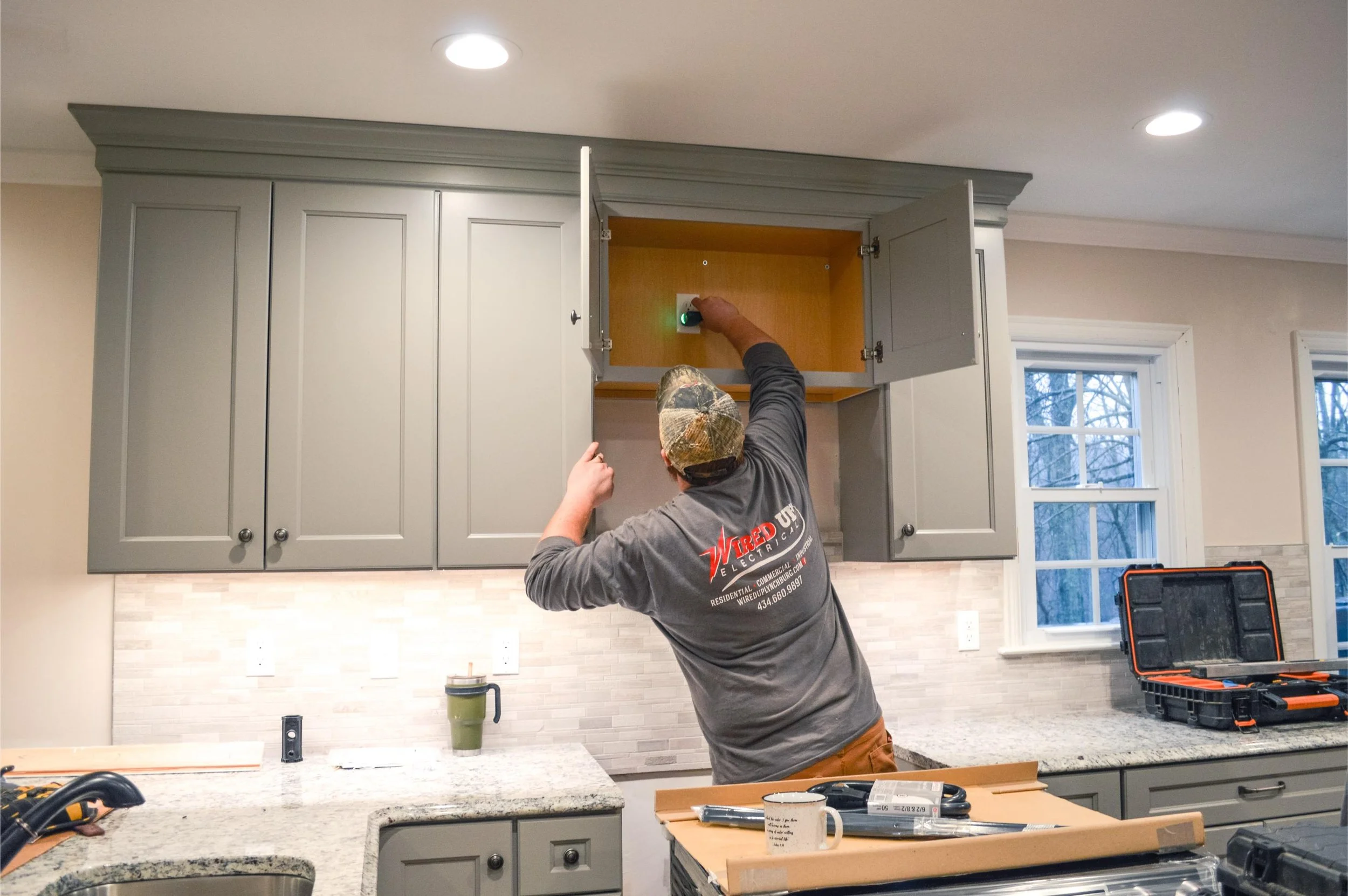
Electrician upgrades a kitchen cabinet with a modern electrical component, improving safety, functionality, and support for updated home systems.
Fuse box-to-breaker panel conversion often gets postponed because of long-standing assumptions that make the upgrade feel unnecessary, disruptive, or risky. Electricians hear the same ideas repeated over and over, usually passed along through neighbors, family members, or online sources that oversimplify electrical realities. Clearing up these misconceptions helps Forest, VA and surrounding area homeowners recognize conversion as a professional safety upgrade that brings older homes into alignment with modern electrical needs.
Why Familiar Systems Can Still Be Risky
Many homeowners assume fuse boxes offer the same protection as breaker panels simply because both shut power off during overloads. While fuses interrupt current, their design reflects a time when electrical demand looked very different. Most fuse systems were installed when homes were powered by a few lights, a refrigerator, and perhaps a radio or an early television.
Fuse box-to-breaker panel conversion replaces one-time melt protection with reusable, precisely calibrated breakers. Breakers trip at defined thresholds, while fuses rely on thin metal links that degrade gradually. Fuse holders can loosen, corrode, or overheat, which reduces reliability without obvious warning signs.
Electricians frequently discover unsafe practices during inspections, such as oversized fuses installed to stop frequent blowing. That workaround defeats the protective purpose entirely and raises fire risk. Breaker panels remove that temptation and provide predictable protection that reflects modern electrical loads rather than mid-century living patterns.
The Fear That Every Wall Must Come Down
A major concern among Forest, VA and surrounding area homeowners is the belief that a fuse box-to-breaker panel conversion automatically requires tearing open walls and replacing all wiring. That assumption alone stops many people from exploring their options. While some older homes do need wiring upgrades, conversion does not automatically mean a full rewire.
Professional electricians begin by thoroughly evaluating the existing wiring. In many homes, wiring remains structurally sound and compatible with a breaker panel. Conversion typically focuses on the panel, grounding, and service components rather than disturbing every circuit.
Electricians clearly separate required upgrades from optional improvements. That clarity keeps projects efficient and minimizes disruption to finished spaces. Homeowners are often relieved to learn that conversion can be completed with far less intrusion than expected, making the decision feel far more manageable.
When Appliances Do Not Tell The Full Story
If appliances run without issue, many homeowners assume the fuse box must be handling the load just fine. That assumption overlooks how dramatically household electricity usage has changed. Modern homes operate multiple high-demand appliances simultaneously, often for extended periods.
Fuse box-to-breaker panel conversion supports continuous modern usage rather than short bursts of demand. HVAC systems, dishwashers, laundry equipment, computers, and entertainment systems draw steady power throughout the day. Fuse boxes were never designed for that level of sustained electrical flow.
Electricians frequently find fuse boxes operating near capacity day after day. That constant strain accelerates wear, increases heat buildup, and shortens component lifespan. Breaker panels distribute power more evenly and support proper load balancing, preparing homes for real-world usage rather than outdated expectations.
Understanding What Tripping Really Means
Some homeowners think breaker panels trip too often compared to fuses and see this as a flaw. This misunderstanding usually comes from not knowing how modern electrical protection works. Breakers are designed to react when unsafe conditions occur, not because they are overly sensitive. A tripping breaker is a warning that signals a potential overload or fault in the circuit.
A fuse box-to-breaker panel conversion introduces a system that responds predictably rather than inconsistently. Fuses may appear more tolerant because they are oversized or improperly installed, but that tolerance hides risks rather than solving them. Oversized fuses can allow wiring to heat up or become stressed before they blow.
When a breaker trips, it alerts homeowners that attention is needed before damage happens. Licensed electricians design systems to match household load, balancing circuits to minimize nuisance trips while maintaining protection. In this way, tripping reflects a healthy, functional system rather than a weakness.
Insurance Silence Does Not Equal Approval
Many homeowners assume that if their insurance company has not mentioned electrical issues, the fuse box must be acceptable. Insurance policies often do not flag outdated systems until policy renewals, inspections, or claims occur. This can create a false sense of security, leaving homes vulnerable to overlooked electrical risks.
Converting a fuse box to a breaker panel aligns the home with modern safety standards, which insurers recognize as reducing risk. A modern panel provides clearer documentation of safety compliance and may simplify underwriting decisions. Homes with breaker panels are viewed more favorably, especially when adding new appliances or home technology.
Electricians often recommend converting proactively rather than waiting for insurance prompts. Planning upgrades on your own schedule offers more flexibility, reduces stress, and avoids the rush of last-minute demands. This approach secures safety and smooth execution.
Looking Beyond Convenience
Resetting a breaker feels easier than replacing a blown fuse, leading some homeowners to think convenience is the main benefit of conversion. While convenience is a factor, the primary advantages lie in improved safety, reliability, and system performance. Modern breaker panels reduce heat buildup, maintain proper grounding, and distribute power evenly across circuits, protecting both wiring and appliances.
A fuse box-to-breaker panel conversion enhances overall electrical reliability. Electronics experience more stable voltage, and appliances operate under less stress. Over time, this reduces equipment wear, decreases the likelihood of unexpected outages, and improves the home’s overall energy efficiency.
Electricians approach conversion as a foundational infrastructure upgrade rather than a simple convenience. Homes with properly installed breaker panels experience fewer electrical interruptions and operate predictably. Convenience becomes an additional benefit, layered on top of improved safety and system longevity.
Preserving Character Without Preserving Risk
Some homeowners worry that replacing a fuse box will compromise the historic character of their home. While preserving architectural charm is important, electrical systems serve a functional and safety-critical role. Outdated fuse boxes cannot provide the protection required by modern electrical loads.
Conversion to a breaker panel does not alter a home’s visual appeal. Panels are often located in basements, garages, or utility spaces where aesthetics matter less than safety. Upgrading the system protects the home and the family without impacting the historic features that make the property special.
Electricians understand the balance between maintaining character and improving safety. By modernizing electrical systems, historic homes can function efficiently and reliably in today’s world. Residents retain the charm of their home while significantly reducing fire and safety risks.
Rethinking The Cost Conversation
Cost concerns often delay fuse box upgrades, especially when the system still seems functional. Many homeowners overestimate expenses based on outdated or anecdotal information, assuming that conversion is a major, costly project.
In reality, a fuse box-to-breaker panel conversion can be affordable, particularly when the existing wiring is still sound. Electricians assess the home and tailor solutions to its specific needs, preventing unnecessary costs while maximizing safety and efficiency.
Viewed long term, upgrading delivers real value. Improved electrical safety, fewer outages, better insurance eligibility, and preparation for future technology all contribute to making conversion an investment rather than an optional expense. Forest, VA and surrounding area homeowners gain security and peace of mind for years to come.
Why Online Guides Fall Short
Online tutorials create the impression that homeowners can convert a fuse box to a breaker panel on their own. While step-by-step guides may seem helpful, live electrical service lines remain energized even when the main switch is off, posing serious hazards.
Professional conversion is necessary because even minor mistakes can have severe consequences. Licensed electricians handle permits, inspections, grounding, and coordination with utility providers. Mistakes can lead to shocks, damaged appliances, fire risk, or failed inspections, making DIY attempts far more costly than professional work.
Hiring a professional confirms the work is safe, efficient, and long-lasting. Correctly executed conversions replace outdated infrastructure with modern, reliable systems. Homeowners benefit from immediate safety and avoid hidden issues that could appear years later.
Professional Expertise Changes Everything
Licensed electricians approach fuse box-to-breaker panel conversion with careful planning and thorough testing. They evaluate current and future loads, select the appropriate panel size, install updated grounding, and verify compliance with code requirements, with a focus on long-term performance.
Electricians also guide homeowners through each step, explaining findings, recommendations, and potential upgrades. This verifies that the system supports modern appliances, technology, and anticipated future needs, such as electric vehicle chargers or home expansions.
For Forest, VA and surrounding area homeowners, professional conversion provides peace of mind. Outdated, potentially hazardous systems are replaced with dependable infrastructure. Myths are replaced with facts, and homes are equipped with safe, reliable, and durable electrical systems ready for decades of modern use.
FAQs – Fuse Box to Breaker Panel Conversion in Forest, VA and surrounding areas
Not every home requires immediate conversion, but many benefit from professional evaluation to assess safety and electrical capacity.
In many cases, existing wiring remains compatible and does not require full replacement, depending on condition and code compliance.
Updated electrical systems appeal to buyers, inspectors, and insurers, which can support resale value and market confidence.
Most conversions are completed within one to two days, depending on the service configuration and any required upgrades.
Breaker panels provide more accurate protection and eliminate unsafe fuse practices, which significantly lowers the risk of electrical fires.
Call Wired Up Electrical if you need reliable ceiling fan installation and repair, exhaust fan installation, electrical panel installation, and electrical panel repair services in Forest, VA, and its surrounding areas. Rely on us for fast response times and dependable scheduling. Call today for a free quote.
