
Circuit Breaker Tripping Again and Again? Why It Happens
Quick Answer: A circuit breaker that keeps tripping is doing its job — cutting power when a circuit draws more current than it can safely handle, to prevent overheating and fire. The repeated tripping means there's a recurring cause. The most common is an overloaded circuit, with too many devices drawing power at once; the fix is often redistributing the load. More serious causes are a short circuit (wires making improper contact, creating a dangerous surge), a ground fault (current escaping to ground, common near water), or a worn-out breaker. Overloads are usually manageable, but short circuits and ground faults involve wiring or device faults that are safety hazards. Don't keep resetting or oversize the breaker — diagnose the cause.
It's easy to treat a tripping breaker as a nuisance — flip it back on and get on with your day. But a breaker that keeps tripping is a safety device telling you something's wrong. Every trip is the breaker protecting your home, and when it keeps happening, the cause underneath keeps happening too. Get a handle on what makes a breaker trip and you can tell a simple overload from a hazard that needs fixing, instead of resetting and hoping it sticks.
The Breaker Is Protecting You
A circuit breaker flow monitors the current running through a circuit and trips — cuts the power — when that current exceeds what the circuit can safely carry. The point is to keep the wiring from overheating and starting a fire. So a trip isn't a malfunction; it's the breaker doing exactly what it's built to do. An occasional trip after you've overloaded a circuit is normal. Repeated tripping is the part to pay attention to, because it means a recurring problem the breaker keeps answering. The move is to find and fix that cause — not to defeat the protection by resetting over and over or, worse, dropping in a bigger breaker.
The Most Common Cause: Overload
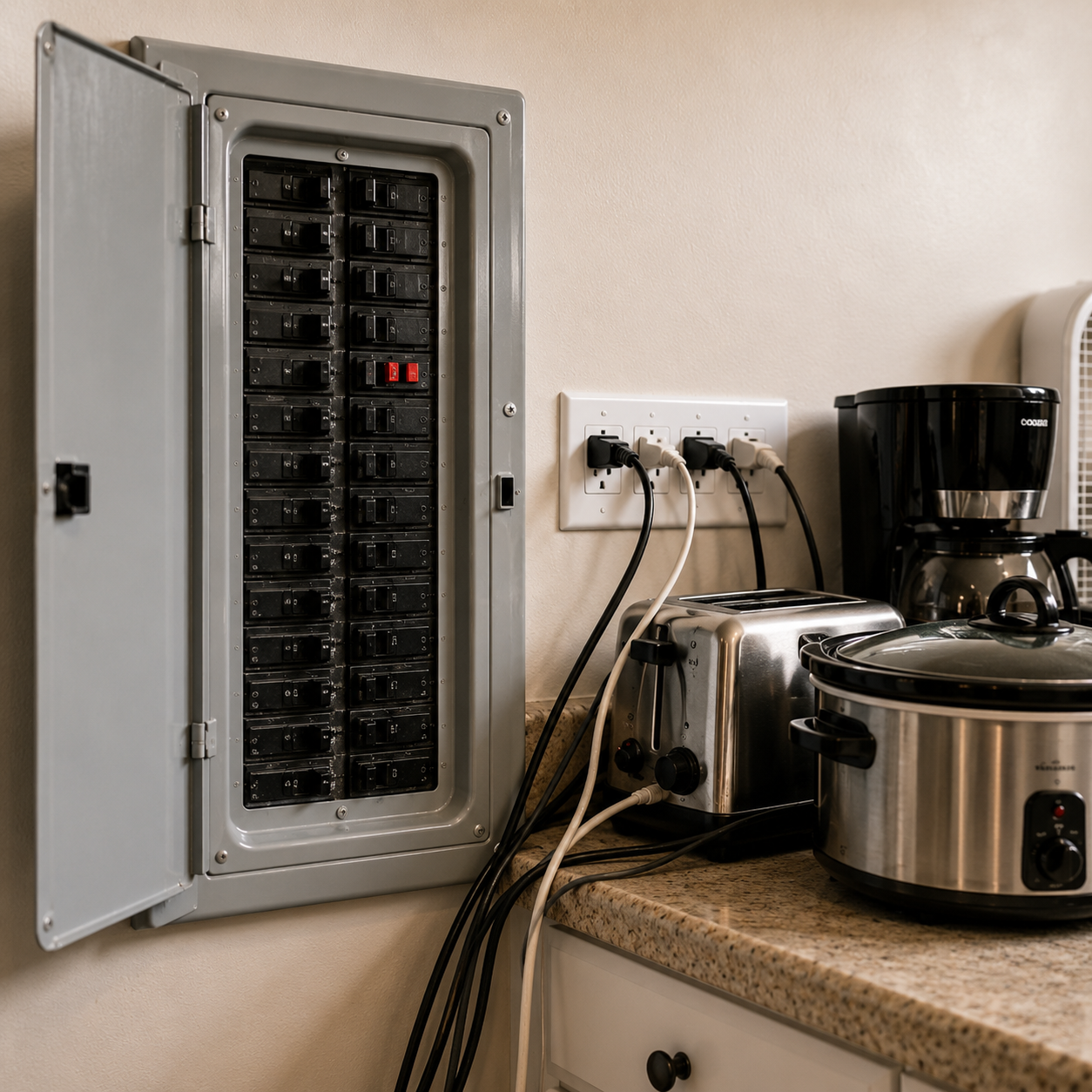
Far and away the most common reason a breaker keeps tripping is an overloaded circuit — too many devices pulling power on the same circuit at once, past what it's rated for. When combined demand exceeds what the circuit can handle, the breaker trips to prevent overheating. You'll usually see it when several power-hungry items run together. If the breaker goes whenever you run certain devices at the same time, an overload is the likely culprit. The fix is usually to spread the load out — move some devices to other circuits, or stop running so many heavy items on one circuit at once. And if a circuit is overloaded all the time, that's a sign you need more circuits for how you actually use the place.
| Cause | What's happening |
|---|---|
| Overloaded circuit | Too many devices at once |
| Short circuit | Wires touch improperly; dangerous surge |
| Ground fault | Current escapes to ground (near water) |
| Worn or failing breaker | Breaker itself faulty |
| Recurring trips | Underlying issue to diagnose |
The More Serious Causes
When overload isn't the cause, the issue may be more serious. A short circuit happens when a hot wire touches a neutral or another wire where it shouldn't, creating a sudden surge of current that trips the breaker instantly. Shorts come from damaged wiring or a faulty device, and they're a fire hazard. A ground fault is similar but involves current escaping to ground — often where water's around, like kitchens, bathrooms, and outdoors — and it trips the breaker (or a GFCI) to protect you from a shock. Both shorts and ground faults point to wiring or device faults, and both are real safety concerns. A breaker that trips instantly, keeps doing it, or goes around one particular device or a wet spot can be flagging one of these, and they're worth diagnosing, not ignoring.
A Worn Breaker — and Why Not to Oversize It
Less often, the breaker itself is failing. Breakers wear out over time and can trip with no real overload or fault behind them, or stop holding at all. If the circuit isn't overloaded and there's no sign of a short or ground fault, but the breaker still trips, a worn breaker may be the reason, and it needs replacing. One thing matters above all here: the answer to frequent tripping is never to swap in a higher-rated breaker to make it quit. The breaker is sized to protect the circuit's wiring; a bigger one can let that wiring overheat and start a fire. Finding the real cause — rather than oversizing the breaker — is what keeps you safe.
Never replace a tripping breaker with a higher-rated one to stop it from tripping, and don't keep resetting a breaker that won't stay on. The breaker protects the wiring; oversizing it can let the wiring overheat and start a fire. Repeated tripping should be diagnosed, especially if it's immediate, tied to a device, near water, or comes with any burning smell or warm outlets.
Why You Shouldn't Just Reset and Ignore It
Repeated tripping deserves your attention because some of what causes it is genuinely dangerous. An occasional overload is harmless and easy to fix, but frequent tripping points to a recurring overload, a short circuit, a ground fault, or a failing breaker — and shorts and ground faults bring fire and shock risk through faulty wiring or devices. Reset the breaker over and over, or oversize it, and you've stripped out the protection it gives you, which is a dangerous trade. The right move is to find out why it keeps tripping and deal with the cause. An electrician can tell whether it's an overload to redistribute, a wiring fault to repair, or a breaker to replace, and fix it safely. For a breaker that keeps tripping, that diagnosis is the answer — not another reset.
Frequently Asked Questions
Because something keeps causing the circuit to draw more current than it can safely handle. The most common cause is an overloaded circuit — too many devices at once. Other causes are a short circuit (wires touching improperly), a ground fault (current escaping to ground), or a worn breaker. The breaker trips to prevent overheating and fire, so repeated tripping signals a recurring issue to diagnose.
Yes, an occasional trip is normal — the breaker is protecting the circuit from drawing too much current, such as when you overload it. What's not normal is frequent, repeated tripping, which points to a recurring cause like a persistent overload, a short circuit, a ground fault, or a failing breaker. Regular tripping is a warning to diagnose, not just reset away.
No, never. The breaker is sized to protect the circuit's wiring, and replacing it with a higher-rated one to stop the tripping can let the wiring overheat and cause a fire. This is a dangerous shortcut. The correct approach is to diagnose the real cause — an overload, short circuit, ground fault, or failing breaker — and fix it, keeping the breaker properly sized for the circuit.
An overload is too many devices drawing power on a circuit at once, exceeding capacity, which the breaker trips to prevent overheating. A short circuit is a hot wire making improper contact with a neutral or another wire, creating a sudden, dangerous surge that trips the breaker immediately. Overloads are common and often fixable by redistributing load; short circuits involve wiring or device faults and are more serious.
Worry when the tripping is frequent, immediate, tied to a particular device, occurs near water (suggesting a ground fault), or comes with a burning smell or warm outlets. These point to wiring or device faults with safety risks. Persistent tripping beyond an occasional overload should be diagnosed by an electrician, since some causes are real fire and shock hazards that need proper repair.
Yes. Breakers can wear out over time and trip without an actual overload or fault, or fail to hold. If a circuit isn't overloaded and there's no apparent short or ground fault, but the breaker still trips, a worn breaker may be the cause and may need replacing. Diagnosing this involves ruling out the other causes first, which is part of a professional assessment of persistent tripping.
Diagnose It, Don't Defeat It
A circuit breaker that keeps tripping is protecting you from a recurring problem — most often an overloaded circuit, but sometimes a short circuit, ground fault, or worn breaker. An occasional trip is normal, but frequent tripping shouldn't be reset away or worked around by oversizing the breaker, since some causes are real fire and shock hazards. Finding out why it keeps tripping and fixing the cause is the safe approach — the breaker is doing its job, and your job is to deal with what's setting it off.
Breaker that keeps tripping? — Get the cause diagnosed and safely fixed, from an overload to a wiring fault. Wired Up Electrical serves Lynchburg, Forest, Bedford. Call (434) 254-1264.
