
3-Prong or 4-Prong Dryer Outlet? What Actually Changed
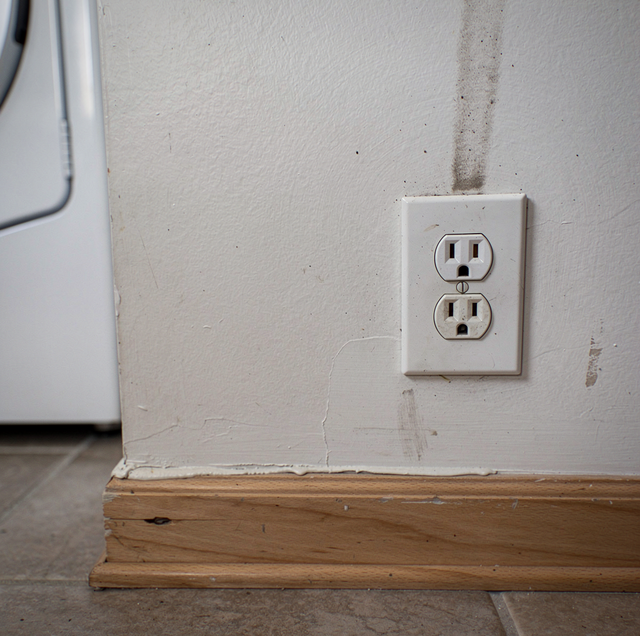
The advice you hear at the appliance counter sounds simple. Your new dryer arrived without a cord. The outlet behind your old one has three slots, so you buy the three-prong cord, bolt it on, and you are finished. What nobody mentions is that the two cords are not two shapes of the same thing.
They are wired to two different ideas about where your dryer's metal cabinet gets its connection to earth, and your house was built around one of them. Whether your laundry room has the older three-slot receptacle or the newer four-slot one indicates which idea your circuit was wired to, and it changes what your electrician needs to do before your new machine is safe for you to touch.
The Older Circuit Asked One Wire to Do Two Jobs
An electric dryer is two machines sharing one circuit. The heating element works across both hot conductors at 240 volts. The motor, the timer, the controls, and the drum light work at 120 volts, between one hot conductor and the neutral. The neutral carries the return current from that smaller half, which is why a dryer circuit needs a neutral rather than the two hot conductors a baseboard heater gets by with.
On the older three-wire hookup, the neutral was also handed the safety job. A metal strap inside the dryer tied the machine's cabinet to the neutral terminal, so a hot conductor touching the frame would send fault current back through that same wire and open the breaker. It worked, and millions of dryers ran on it for decades, but one conductor had two unrelated duties.
Trouble arrives when the shared conductor fails. Neutral connections loosen, corrode, and break like any other, and a break upstream of the dryer leaves the cabinet bonded to a wire no longer tied to the panel. The drum can keep turning while the shell you touch floats at whatever the 120-volt side puts on it.
Never swap the cord or change the receptacle yourself; a licensed electrician does both, because a mismatched bonding strap can put line voltage on the dryer cabinet, and the first warning anyone gets is a shock.
What the Fourth Wire Actually Does
The four-wire arrangement separates those two duties and assigns each its own conductor. The neutral keeps the work it always had, carrying return current from the 120-volt half of the machine whenever the motor, the controls, or the drum light are drawing. The fourth conductor, the grounding conductor, carries no current while the dryer is operating. It sits there as a spare path, connected to the cabinet at one end and to the panel at the other, waiting for the day a damaged conductor or a failed component puts voltage where it should not be. On that day it gives fault current a low-resistance route home, the breaker sees a surge it cannot ignore, and the circuit opens before anybody has a chance to lean on the machine.
Separating the two also changes what an open neutral can do. With the cabinet tied to the grounding conductor alone, a neutral that breaks somewhere in the wall stops the 120-volt side from working and leaves the cabinet exactly where it was, at panel potential. The failure becomes an annoyance with a dryer that will not start, rather than a hazard you cannot see.
Inside the dryer, the change is small, and the consequence is not. Electric dryers leave the factory with a link between the neutral terminal and the cabinet, and the installation sheet in the box says what to do with it: in place for a three-wire hookup, moved aside for a four-wire one. Matching the cord, the receptacle, and that link is one job rather than three, and a licensed electrician handles it all at once.
Why Practice Moved Toward Four Wires
The three-wire dryer connection was standard American practice for decades, and it was not an oversight. It was a considered trade in an era of varied materials and expectations, and it outlived most of the appliances it powered. New dryer circuits moved to the four-wire pattern in the middle of the 1990s.
What shifted was the reasoning about a single point of failure. A hookup that is safe while every connection holds differs from one that stays safe when a connection lets go, and the three-wire arrangement put a person's hands on the losing side of that difference. Separating the grounding conductor removes the failure from the path that protects you.
The change applied to new work. Circuits already in the walls were not ordered ripped out, which is why so many laundry rooms still have a three-slot receptacle that has been working since long before the dryer in front of it was built. Whether yours may stay is a question for a licensed electrician and your local permitting office, not for an appliance delivery crew.
How the Two Receptacles Differ at the Wall
You can tell which one you have without moving anything heavy. The older receptacle has three openings: two angled slots and one shaped like an upside-down L. The newer one has four, adding a separate rounded opening for the grounding conductor. The faces are keyed so a four-prong cord cannot be pushed into a three-slot outlet, and the reverse fails as well.
Adapters exist that bridge the gap, and they are worth understanding. A plug adapter does not add a conductor to a circuit that never had one. It takes the grounding pin on the new cord and ties it back to the neutral, which rebuilds the older arrangement behind a newer-looking plug, and everything above about an open neutral applies again.
What Scuffs a Dryer Cord Behind the Machine?
Cord damage behind a dryer has a single common cause, and it has nothing to do with the number of prongs. The cord leaves the cabinet through a punched opening in the sheet metal, and a strain relief clamp holds it there so the edge of that opening never touches the jacket. Skip the clamp or fit the wrong one, and the metal edge scuffs every time the machine shakes.
The second source is the wall itself. A dryer pushed tight to the baseboard folds its cord against the receptacle, and the vibration of every load works that fold until the jacket opens. Vent hose, lint, and a warm cabinet finish the job. A cord taken on and off a machine two or three times is usually bent hardest right at the clamp.
None of that is cosmetic. A scuffed jacket on a 240-volt cord sits inches from a metal cabinet in a room where people stand barefoot on a hard floor, and the damage hides behind an appliance nobody looks behind. If you are having the receptacle changed anyway, ask the electrician to check the cord entry while the machine is pulled out.
Putting a New Dryer on an Older Outlet
So the new dryer arrives, the box holds no cord, and the outlet has three slots. Two roads lead out of that. A three-prong cord can be fitted to the machine with the factory link left in place, keeping the older arrangement. Or the circuit can be rewired to four conductors and the receptacle changed to match. The first is quicker; the second retires a failure mode. Which one your house gets is a call for a licensed electrician who has looked at the panel, the run, and what your local authority expects.
One thing worth reading before any of it happens is the warranty paperwork in the dryer's box. It covers the machine's own defects, and the cord is often not part of the machine at all, since it ships separately and gets fitted at your house. Damage traced to a hookup that did not follow the manufacturer's installation instructions is the sort of claim that gets refused, and the refusal lands on you, not on whoever wired it. A licensed electrician working to those instructions protects the warranty and the person who has to touch the dryer every week.
Frequently Asked Questions
Adapters for that direction exist, and they work by tying the cord's grounding pin to the neutral. Your circuit has three conductors afterward, so the cabinet on your new dryer ends up bonded to the neutral as your old one was. You gain a plug that fits and nothing else.
Electric dryers are normally sold without a cord, because nobody at the shop knows which receptacle waits in your laundry room. You choose the cord to match the outlet, or your electrician chooses it for you, and the link inside the machine gets set to match the cord. A gas dryer is different and comes with a standard wall plug.
It comes out. Running a fourth conductor usually means new cable from your panel to the laundry wall, and your old receptacle is replaced with the four-slot pattern at the same time. Leaving a three-slot outlet still live would let somebody plug the older cord back in later, which puts you right where you started.
Unsafe is too blunt a word for what you have. The arrangement carries a failure mode the newer one does not, and that failure is rare and serious together. Whether yours may stay in service and on what terms is determined by a licensed electrician and the office that issues permits where you live. Your delivery crew has no standing to rule on it, and neither does an appliance parts counter.
No. A gas dryer heats with gas and uses electricity only for the drum motor, the controls, and the light, so it runs on an ordinary 120-volt circuit and plugs into a normal outlet. If you are swapping an electric dryer for a gas one, the 240-volt receptacle behind your machine becomes an abandoned outlet, and your electrician should not simply leave it live there.
Pull the machine out far enough to see the wall plate, or hold your phone behind it and take a photograph. Count the openings: three means the older pattern, four means the newer one. Photograph the data plate on the back of your dryer as well, and keep the installation sheet that came in the box. Those three pieces let an electrician tell you over the phone what the hookup will really involve, and they let a delivery crew know before they arrive whether the machine can be connected that day or if it has to wait until the outlet has been addressed.
Replacing a dryer and unsure about the outlet behind it — Get a licensed electrician to look at the circuit, the receptacle, and the cord before the new machine is pushed back against the laundry wall for good. Wired Up Electrical serves Lynchburg, Forest, and Bedford. Call (434) 254-1264.
