
Why Your GFCI Keeps Tripping: 6 Real Causes
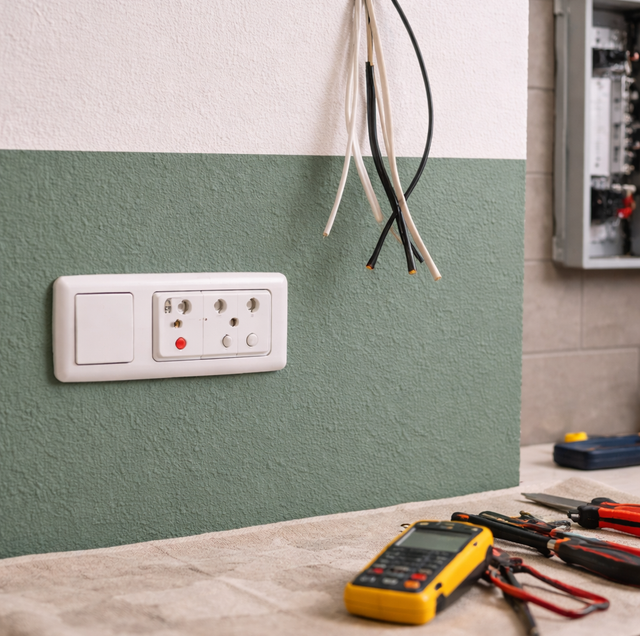
Quick Answer: A GFCI trips because it detects a tiny imbalance between the hot and neutral wires, which means some current is leaking to ground instead of flowing back through the circuit. Usually the leak is moisture in a box, a failing appliance, a wiring fault, or a worn-out GFCI at the end of its life. A GFCI that keeps tripping is often doing exactly what it should, so the goal is to find the leak, not to defeat the device.
That GFCI outlet in the bathroom, garage, or on the back porch is not being difficult for no reason. It is built to shut off power the instant it senses that electricity is escaping the circuit, and it will keep shutting off until the escape is gone. Understanding what it watches for turns a frustrating reset-and-repeat cycle into a short list of things you can actually check.
What A GFCI Actually Senses
A ground-fault circuit interrupter compares two things: the current flowing out on the hot wire and the current returning on the neutral wire. On a healthy circuit, those two numbers are equal, because whatever leaves has to come back. The GFCI runs both wires through a small sensing ring, and as long as the outgoing and returning currents cancel out, nothing happens.
The moment even a fraction of the current takes a different path back, a leak to ground through water, through a damaged wire, or through a person, the two numbers no longer match. The GFCI reacts to a mismatch as small as about 4 to 6 milliamps, which is far below the level that would trip a normal circuit breaker. When it sees that gap, it snaps the circuit open in a fraction of a second.
That sensitivity is the whole point. A ground fault often means current is finding a path it should not, and if that path runs through a person standing on a wet floor, the result can be lethal. The GFCI is the difference between a startling tingle and a stopped heart. So a device that keeps tripping is not broken by default. It is frequently reporting a genuine problem, and that is worth respecting before you go hunting for the reset button one more time.
GFCI trip versus breaker trip: These protect against different dangers, and confusing them wastes time. A breaker in the panel trips on overload or a short, when too much total current flows, and it protects the wiring from overheating. A GFCI trips on imbalance when current leaks to ground, and it protects people from shock. If your panel breaker holds but the outlet keeps cutting out, you are dealing with a ground fault, not an overload. Adding up how many things you have plugged in will not solve a GFCI trip.
The Common Reasons It Keeps Tripping
Most repeat trips trace back to one of a handful of causes. Moisture gets the most blame, and it earns some of it, but it is one trigger among several. Working through them in order usually points to the culprit.
Moisture or water intrusion: GFCIs live in the wettest spots in a home for a reason, and those same spots let water reach places it should not. A cracked gasket on an outdoor cover, a sprinkler that hits a receptacle, condensation inside a garage box, or splash near a bathroom counter can all create a low-level leak path. Water bridges hot to ground just enough to unbalance the circuit. This one is worth checking first because it is common and often reversible.
A failing appliance leaking to ground: Motors, heating elements, and pumps break down internally as they age. A worn hair dryer, a shop vacuum, a sump pump, a freezer, or an old power tool can develop insulation breakdown that lets a trickle of current escape to the chassis and then to ground. The appliance may still run, but it leaks enough to trip a sensitive GFCI. A failing appliance is one of the most frequent real causes, and it hides easily because the device seems to work.
Too many outlets on one GFCI: A single GFCI receptacle often protects several downstream outlets wired after it. A fault anywhere on that chain- a wet box two rooms away, a bad appliance in the garage- trips the one GFCI at the head of the line. The tripping outlet is not always where the problem lives. This is why narrowing down which downstream location is at fault matters so much.
A shared or mis-wired neutral: If a neutral wire is shared between circuits or connected on the wrong side, some return current bypasses the sensing ring. The GFCI reads that as a leak and trips, even when nothing is actually wrong with what you plugged in. This is a wiring issue, not a user issue, and it usually shows up after a remodel, a repair, or a device swap done without care.
An actual ground fault in the wiring: Insulation on a cable can be nicked by a drywall screw, chewed by a rodent, or degraded by heat and age. A pinched wire in a box, a loose connection arcing to a metal enclosure, or moisture inside a wall cavity all create a genuine leak inside the permanent wiring. These faults do not go away when you unplug things, because the problem is the wiring itself.
A worn-out GFCI at end of life: The internal electronics and the small solenoid that trips the device do wear out, typically over roughly 10 to 15 years, and faster in damp or hot locations. An aging GFCI can begin nuisance-tripping with nothing actually wrong, or worse, it can stop protecting entirely. If the outlet is old and everything else checks out, the device itself may be the answer.
Narrowing It Down Yourself
A methodical unplug-and-reset routine solves a surprising number of these without any tools. The idea is to remove every variable, confirm the circuit can hold, then reintroduce loads one at a time until the trip returns.
Start empty: Unplug everything on the GFCI and every downstream outlet it feeds. Press RESET. If it holds with nothing plugged in, the wiring and the GFCI itself are probably fine, and the fault is in something you unplugged.
Add loads back one at a time: Plug devices in one by one, waiting a moment after each. When the GFCI trips, the last thing you plugged in is your leaking appliance. Retire it or have it serviced. If two different appliances each trip it, you may have a marginal circuit and a pro should look.
Dry out a wet box: If an outdoor or garage receptacle is damp, cut power to it at the breaker, let it dry fully, and check that the weatherproof cover and gaskets are intact before restoring power. Never work on a box while it is wet, and never open a box you suspect is wet without killing power first.
Check what it protects: Walk the downstream outlets. A GFCI in a bathroom sometimes protects a garage or exterior receptacle you would never connect it to by sight. A fault at one of those hidden downstream points trips the upstream device. Testing each one narrows the location fast.
Think of the sensing ring as a scale with the hot current on one pan and the neutral current on the other. As long as both pans balance, the tray sits level and power flows. The instant a few milliamps slip off one side to ground, the tray tips, and the GFCI cuts power rather than let the imbalance continue. Your job when troubleshooting is simply to find what is stealing weight off one pan.
Use the TEST and RESET buttons: The TEST button deliberately creates a small imbalance to confirm the device still trips, and RESET restores power after a trip or a test. A healthy GFCI should click off firmly when you press TEST and hold when you press RESET. If it will not reset with everything unplugged, or will not trip when tested, the device or its wiring needs attention.
To find a leaking appliance yourself, unplug everything on the GFCI and every downstream outlet it feeds, then press RESET. If it holds with nothing plugged in, add devices back one at a time and wait a moment after each. When the GFCI trips, the last thing you plugged in is the culprit, so retire it or have it serviced.
When It Is A Real Wiring Fault For An Electrician
Some situations are past the point of a homeowner reset. Repeated trips with nothing plugged in and everything downstream disconnected point to a fault inside the permanent wiring or a shared-neutral problem, and those live behind the walls where guessing is dangerous. A warm or discolored outlet, a scorched faceplate, a buzzing sound, or any burning smell means current is going somewhere it should not, so cut power at the breaker and call a licensed electrician rather than resetting again.
A GFCI that keeps tripping without an obvious cause is telling you something, and the safe move is to have someone trace the fault, not silence the messenger. A licensed electrician can put a meter on the circuit, isolate the leaking leg, and repair the wiring or replace a worn device correctly.
A warm or discolored outlet, a scorched faceplate, a buzzing sound, or any burning smell means current is going somewhere it should not, so cut power at the breaker and call a licensed electrician rather than resetting again. Never swap a tripping GFCI for a standard outlet or jam the reset, since that removes the shock protection exactly where water is nearby.
Frequently Asked Questions
Yes. Because a single GFCI often feeds a string of downstream receptacles through its LOAD terminals, a loose or corroded neutral at any one of those outlets can unbalance the whole protected circuit. A backstabbed connection, where the wire is pushed into a spring clip instead of tightened under a screw, is a frequent weak point that loosens over years of thermal cycling and starts nuisance-tripping the upstream GFCI.
It can, but not because of the temperature alone. A freezer or refrigerator with a defrost heater or an aging compressor can leak a small ground current, and that leak is one stressor among many. Any appliance with a motor or heating element develops insulation wear over its life regardless of the season, so an outlet that trips in winter for a freezer will often do the same in summer for a shop vacuum or pump.
Both watch for the same hot-neutral imbalance, but they sit in different places. A GFCI receptacle protects itself and any outlets wired downstream of it, and its TEST and RESET buttons are at the outlet. A GFCI breaker sits in the panel and protects the entire circuit from the panel outward, with its test button on the breaker face. If your protected outlet has no buttons, the protection is likely a breaker in the panel.
Often, yes, and that surprises people. The downstream outlets are wired to the GFCI's LOAD terminals (as opposed to the LINE terminals that feed the device itself), and everything on the LOAD side rides on that one GFCI's protection. A quick way to map the chain is to trip the GFCI on purpose and then check which other outlets go dead; those are the ones it guards. Any of them, indoors or out, can be the outlet with the actual fault, so the dead outlets it feeds are exactly where to look.
A GFCI receptacle generally lasts about 10 to 15 years, and the internal sensing circuit degrades faster in humid, hot, or heavily used locations like a garage or a patio. A useful habit is pressing the TEST button monthly; if the device no longer trips when tested or no longer resets afterward, its protection has failed, and it should be replaced even if it still passes power.
A basic three-light tester can flag reversed wiring, an open ground, or an open neutral, and many now include a GFCI-trip button. What it cannot do is measure the small leakage current that trips a healthy GFCI, or trace a fault through downstream outlets. It is a useful first screen, but a persistent leak usually needs a clamp meter and an electrician to isolate the leaking conductor.
Stop resetting and start fixing the fault — a licensed electrician can trace the leak and restore safe power. Wired Up Electrical serves Lynchburg, Forest, and Bedford. Call (434) 254-1264.
