
Signs of Outdated or Unsafe Wiring: 12 Red Flags to Catch Early
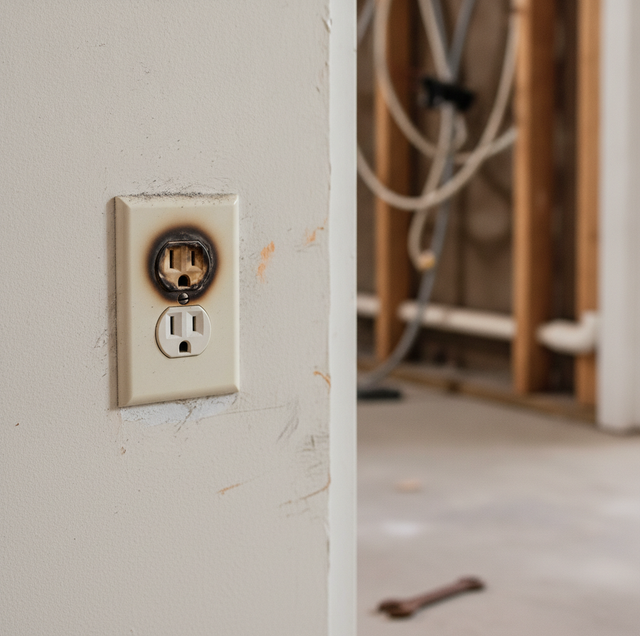
Quick Answer: The clearest signs of unsafe wiring are breakers that trip repeatedly, outlets or switch plates that feel warm or look scorched, a burning or fishy plastic smell, lights that flicker when appliances run, buzzing from outlets or the panel, and older systems like two-prong outlets, fuse boxes, or knob-and-tube and aluminum wiring. Any of these warrants an inspection by a licensed electrician.
Wiring rarely fails all at once. Long before a hidden fault turns into a fire inside a wall, the system usually gives you a series of small tells: an outlet that runs warm, a breaker that keeps tripping, and lights that dip every time the microwave kicks on. Most people learn to ignore these because the house still works. The problem is that the house working and the wiring being safe are two different things.
If you know what the early signs look like, you can catch a failing circuit while it is still a service call instead of an emergency. This guide walks through the warning signs of outdated or unsafe wiring, explains what is actually happening behind the wall when you see them, and lays out what to do next.
Why Old Wiring Struggles With a Modern Home
To read the warning signs, it helps to understand why aging electrical systems fall behind. A home wired decades ago was built for a decade's worth of appliances: a few lamps, a radio, maybe a single window unit. It might have had a handful of circuits for the whole house and only one or two outlets per room.
Now that same house runs a refrigerator, a microwave, a couple of TVs, gaming consoles, a dozen phone and laptop chargers, space heaters in winter, and window units in summer. The wires themselves did not shrink, but the demand climbed far past what the original design anticipated. When too much current runs through a circuit that was never sized for it, the conductors heat up. Heat is the common thread behind almost every wiring hazard.
Two design gaps make older systems especially prone to trouble. First, too few circuits and outlets, which pushes people toward extension cords and power strips that pile several loads onto one aging line. Second, the lack of a grounding conductor. A ground gives stray current a safe path back instead of routing it through you or letting it arc. Older two-wire systems simply do not have that safety path, so a fault that a modern circuit would shrug off can become dangerous.
Think of an old circuit like a two-lane road built for a small town. It carried the traffic fine for years. Drop today's rush-hour volume onto it, and nothing collapses on day one, but the pavement wears, bottlenecks form at weak points, and eventually something gives at the spot already strained.
The Warning Signs, and What Each One Means
The signs below are your early alerts. Individually, one might be a minor nuisance. Several together, or any of the serious ones, point to a system that needs a professional look.
Breakers that trip or fuses that blow repeatedly: A breaker trips to cut power before a circuit overheats, so an occasional trip is protection working as intended. Repeated trips on the same circuit mean it is regularly carrying more than it should, or something on it is faulty.
Warm, discolored, or scorched outlets and switch plates: Cover plates should stay cool. Warmth, brown staining, or scorch marks signal heat building at a connection, often a loose wire behind the device where current arcs across the gap.
A persistent burning, fishy, or hot-plastic smell: Overheated wiring insulation and outlet components give off a distinct acrid or fishy odor as they scorch. This is one of the more urgent signs because it usually means a connection is already cooking.
Flickering or dimming lights when appliances run: If lights dip when the AC, dryer, or microwave starts, the circuit is straining to deliver current, or a connection somewhere is loose enough to interrupt steady flow.
Buzzing from outlets, switches, or the panel: Electricity should move silently. A buzz or sizzle points to arcing or a loose connection, and buzzing from the panel itself deserves prompt attention.
Two-prong (ungrounded) outlets and heavy reliance on extension cords, power strips, or cheater plugs: Two-prong receptacles mean no ground. Leaning on cords and strips to make up for too few outlets, or using cheater plugs to force a three-prong cord into an ungrounded outlet, defeats the safety the ground was meant to provide and overloads old lines.
A fuse box instead of breakers, or a panel from a brand with a known history of problems: Fuse panels often indicate original mid-century wiring that predates modern loads. Certain older panel brands are flagged by inspectors for reliability reasons covered in the FAQ below.
Cloth-insulated, knob-and-tube, or aluminum branch wiring: These older wiring types are common in historic and mid-century homes. Each ages differently and carries its own risks.
Sparking outlets, mild shocks from switches or appliances, and discolored or melted plugs: A visible spark, a tingle when you touch a switch or a plugged-in appliance, or a plug that has melted or browned all point to current going somewhere it should not. Treat these as serious.
Nuisance Trip or Real Problem: How to Tell
Not every tripped breaker is a crisis, and knowing the difference keeps you from either overreacting or ignoring a genuine hazard.
A one-off nuisance trip has a clear, reasonable cause. You ran the space heater, the toaster, and the microwave on the same kitchen circuit at once, the breaker tripped, and after you unplugged something and reset it, it held. That is the breaker doing exactly its job: protecting a circuit that was momentarily overloaded.
A pattern is different. If a breaker trips repeatedly under a normal load, trips with nothing unusual plugged in, or the breaker itself feels warm to the touch, the circuit is telling you something is wrong. The same logic applies elsewhere: one flicker during a thunderstorm is weather; lights that dim every single time the fridge cycles are a symptom. When the behavior repeats under ordinary conditions, stop resetting and start investigating.
Why It Matters: The Hazard Behind the Wall
The reason these signs deserve attention is what they point to: heat and arc faults in places you cannot see. An arc fault is a spark that jumps across a loose or damaged connection. It can reach very high temperatures in an instant, right next to wood framing and insulation. Because most of a home's wiring runs inside walls, ceilings, and attics, the damage builds where no one is watching until it announces itself as scorching, smell, or worse.
That is why a warm outlet or a repeated trip is worth a call rather than a shrug. The visible sign is small; the process it reveals is the part that starts fires.
What to Do About It
You have real options, and they scale to the actual problem rather than requiring you to gut the house.
Stop overloading circuits now: As an immediate step, spread high-draw appliances across different circuits, retire the daisy-chained power strips, and stop using cheater plugs. This reduces heat while you arrange a professional look.
Have a licensed electrician inspect the system: A professional can test circuits, open the panel safely, and determine whether the issue is one bad connection, an overloaded circuit, or system-wide aging. This is the step that turns guesswork into a plan.
Address the specific hazard: Depending on what the inspection finds, the fix might be targeted or broad: repairing or replacing a faulty circuit, adding circuits and outlets so loads are spread out, upgrading an undersized or outdated panel, or a partial or full rewire for deteriorated wiring. Modern arc-fault (AFCI) and ground-fault (GFCI) protection can be added to guard against the exact faults described above.
A critical safety line runs through all of this: this is licensed work, not a weekend project. Do not open your panel, pull outlets, or attempt wiring repairs yourself. The hazards are live and often hidden. And if you ever smell burning or see sparking or smoke, cut power to that circuit at the panel if you can do so safely, get people out if there is any sign of active heat or smoke, and call a professional, or the fire department if there is any doubt about an active fire.
Frequently Asked Questions
Knob-and-tube is not inherently a live hazard when it is intact and left undisturbed; it ran homes safely for generations. The trouble is age and misuse. It has no grounding conductor, its early insulation grows brittle and cracks over the decades, and it was designed to shed heat through open air. Bury it under blown-in attic insulation or push modern loads through it, and it can overheat where it once ran cool. That combination is why most insurers and home inspectors flag it even when it appears to be working.
Aluminum expands and contracts more than copper as it heats and cools with normal use. Over many cycles, that movement can work the wire loose at outlets, switches, and splices, and a loose connection is where arcing and hot spots begin. The concern is specifically at the connection points, not the length of the wire in the wall. Because of that, the accepted correction is to treat the terminations, either with connectors rated for aluminum-to-copper joints or by pigtailing a short copper lead onto the aluminum, rather than leaving the original connections to loosen further.
Which device trips points at a different problem. A GFCI trips on tiny current leakage to ground, often moisture in an outdoor or bathroom box, or a failing appliance, while a standard breaker trips on an overload or a short. So a GFCI that keeps tripping usually means there is a ground fault to find, not simply too many things plugged in. Unplug everything on that circuit and add loads back one at a time, and if it trips with nothing connected, the fault is in the wiring or the device itself.
A handful of older panel and breaker brands earned a reputation because their breakers can fail to trip when a fault occurs. That is the dangerous failure mode: the panel looks normal, the lights are on, everything seems fine, but the breaker may not cut power during the overload or short that it is supposed to catch. Since the protection is the whole point of a breaker, inspectors call these panels out on sight, regardless of whether the home is currently having trouble.
Not necessarily. Two-prong outlets tell you a circuit is ungrounded, and depending on how the home is wired, that can sometimes be corrected circuit by circuit rather than all at once. What raises the stakes is context: a few ungrounded outlets in an otherwise sound system is a smaller matter than widespread ungrounded wiring paired with other warning signs, which together can point toward a larger rewire. An electrician can tell you which situation you are in.
Stop using that outlet immediately. Switch off the circuit feeding it at the breaker so no current is flowing to it, and leave it off. Do not plug anything back in or reset it as a test, and have it inspected before it is energized again. A burning smell at an outlet means heat is already building at a connection behind the wall, and running current through it only feeds that heat.
Schedule an electrical safety inspection — catch failing wiring before it becomes a fire risk. Wired Up Electrical serves Lynchburg, Forest, and Bedford. Call (434) 254-1264.
